The building blocks
Pressure-sensitive tapes are made from a small set of layers combined in different ways:
- Adhesive: the pressure-sensitive layer that does the bonding.
- Backing or carrier: paper, film, cloth, foam or foil that gives strength and handling. A backing faces outward on a single-sided tape; a carrier sits between two adhesive layers.
- Release coating: a thin silicone or other low-adhesion coating that lets adhesive separate cleanly.
- Release liner: a paper or film coated with a release layer that protects the adhesive until use.
- Primer (optional): a tie layer improving adhesive anchorage to the backing.
Five constructions cover most tapes.
The five constructions
1. Single-coated tape with liner
Layers: backing / adhesive / release coating / liner.
Adhesive on one side of a backing, protected by a separate liner. The liner keeps the adhesive clean and makes the tape easy to die cut into parts.
Typical uses: labels and nameplates, wound-care products, die-cut insulating and protective parts.
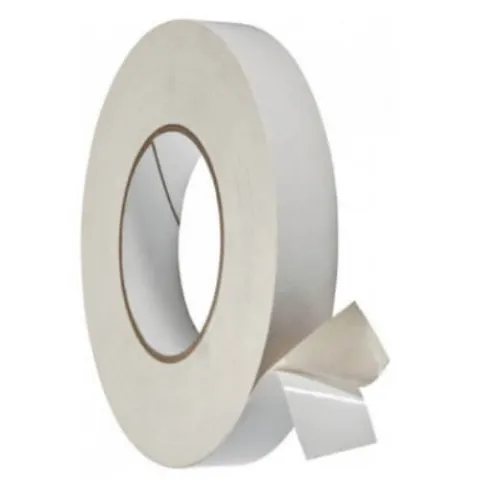
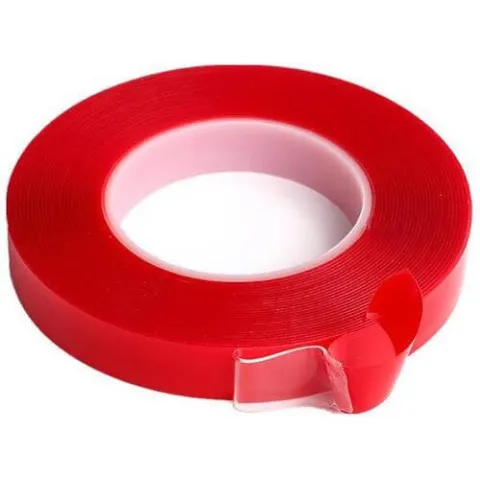
2. Double-coated tape
Layers: liner / release coating / adhesive / carrier / adhesive.
A carrier coated with adhesive on both sides, wound on a liner that is release-coated on both faces. The carrier helps handling and slitting, and allows a different adhesive on each side — for example a strong permanent side and a removable side, or one side formulated for foam and the other for metal.
Typical uses: mounting, splicing, laminating, bonding nameplates, trims and foam gaskets. SyncSol examples: Double Sided Tissue Tape and Double Sided Polyester Tape.
3. Transfer tape
Layers: adhesive / liner (release-coated on both sides).
An unsupported film of adhesive on a liner. When wound, the adhesive contacts both faces of the liner; when unwound, it stays on one side, ready to be "transferred" to a part. With no carrier, the bond line is very thin and conforms closely to textured or curved surfaces.
Typical uses: nameplates, graphic overlays, laminating foams and films, splicing. See Transfer Tape.
4. Double-liner transfer tape
Layers: liner / release coating / adhesive / release coating / liner.
The same unsupported adhesive, but protected by a liner on each side, usually with different release levels so the right liner comes off first. This makes it suitable for precise die cutting and manual placement of parts.
Typical uses: membrane switches, decorative overlays, electronics laminating and other die-cut adhesive parts.
5. Self-wound tape
Layers: release coating / backing / adhesive.
No separate liner. The top of the backing carries a release coating (or is naturally low-adhesion), so the roll unwinds against itself.
Typical uses: most everyday tapes — BOPP Tape for cartons, Masking Tape, PVC electrical tape and duct tape.
Summary table
| Construction | Adhesive sides | Liner | Main benefit |
|---|---|---|---|
| Single-coated with liner | One | Yes | Clean handling, die-cuttable |
| Double-coated | Two, on a carrier | Yes | Bonds two parts, different adhesive per side |
| Transfer | Adhesive only | One, double-release | Thinnest, most conformable bond line |
| Double-liner transfer | Adhesive only | Two | Precision die cutting |
| Self-wound | One | No | Simple, economical, fast to apply |
Why construction matters when specifying
- Thickness and gap filling: carriers and foams add bulk; transfer tapes add almost none.
- Handling: carriers make double-sided tapes easier to slit, cut and apply.
- Processing: die-cut parts need a liner; hand-applied rolls are often self-wound.
- Performance: the backing sets tensile strength and stretch, while the adhesive sets tack and environmental resistance.
Key takeaways
- Tapes are built from adhesive, backing or carrier, release coating and optional liner.
- Single-coated, double-coated, transfer, double-liner transfer and self-wound are the five common builds.
- Double-coated tapes can carry different adhesives on each face.
- Self-wound tapes need no liner, which keeps them simple and economical.
Frequently asked questions
What is a self-wound tape?
A tape with no separate liner. The back of the backing has a release coating, so the roll unwinds against itself — typical of packing, masking and electrical tapes.
What is the difference between transfer tape and double-sided tape?
Transfer tape is adhesive only, with no carrier, giving a very thin bond line. Double-sided tape has a carrier coated with adhesive on both faces, which makes it easier to handle.
Why do double-liner transfer tapes have two liners?
Two liners with different release levels protect both faces of the adhesive, allowing accurate die cutting and controlled placement of small parts.
Can a double-sided tape have different adhesives on each side?
Yes. A carrier allows a different adhesive on each face, such as one permanent and one removable side, or one side tuned for foam and the other for metal.
Tell us the surface, temperature and job — we'll recommend a grade and share its data sheet.