If you have ever seen a tape hold firmly on steel yet lift off a plastic crate within a day, you have met surface energy. It is one of the most useful ideas in adhesive selection, and it explains why the same tape can perform very differently from one material to the next.
What surface energy means
Every solid surface has a certain energy at its face, measured in mN/m (numerically the same as the older unit dynes/cm). For an adhesive to bond, it first has to wet the surface — flow out and make intimate contact, the way water spreads on clean glass. Wetting happens readily when the surface energy of the substrate is higher than the surface tension of the adhesive. When the substrate's energy is lower, the adhesive beads up at a microscopic level, contact area drops and the bond is weak.
A simple comparison: water spreads into a film on clean glass but forms tight beads on a freshly waxed car. The wax has lowered the surface energy.
High, medium and low surface energy materials
Materials are often grouped into three bands. The figures below are typical published values and vary with grade, additives and surface condition.
| Group | Examples | Typical surface energy |
|---|---|---|
| High (HSE) | Steel, aluminium, copper, glass, ceramics | Several hundred mN/m and above |
| Medium (MSE) | ABS, polycarbonate, polyester (PET), nylon, rigid PVC, acrylic (PMMA) | Roughly 38–50 mN/m |
| Low (LSE) | Polypropylene, polyethylene, EVA | Roughly 29–36 mN/m |
| Very low | PTFE, silicone rubber | Below about 25 mN/m |
Powder coatings and paints deserve a special mention. They are not a single material — depending on resin and additives (flow agents, waxes, anti-graffiti and textured finishes) some behave like medium-energy surfaces and others like low-energy plastics. Always test on the actual coating, and if possible on the same batch.
Measuring with dyne pens
A quick shop-floor check uses dyne test inks or pens. You draw a line with an ink of a known surface tension; if it stays as a continuous line for a couple of seconds, the surface energy is at or above that value. If it shrinks into droplets, the surface is lower. Standardised methods exist for film (for example ASTM D2578 and FINAT FTM 15). As a broad rule of thumb, surfaces that hold a line above roughly 38–40 mN/m bond well with many standard acrylic adhesives.
How to bond LSE plastics
You have four main levers:
- Choose an LSE-capable adhesive. Rubber-based and specially modified acrylic adhesives are softer and wet low-energy plastics better than standard acrylics.
- Use a primer. An adhesion promoter wiped on before taping can dramatically increase bond strength on PP and PE.
- Treat the surface. Corona, flame or plasma treatment raises the surface energy of films and moulded parts; this is common in production lines. Treatment effects fade with time, so bond soon after treating.
- Increase contact. Firm roller pressure, a softer or thicker adhesive, and a longer dwell before loading all help.
Avoid trying to bond PTFE or silicone with ordinary tapes — these normally need special etching or dedicated silicone adhesives.
Contamination lowers surface energy
Even a high-energy metal behaves like a low-energy plastic if it carries oil, release agent, fingerprints or silicone. Mould release on plastic parts is a frequent hidden cause of failure. Clean with isopropyl alcohol (IPA) and a lint-free cloth unless your process specifies otherwise.
Key takeaways
- The adhesive must wet the surface; it wets best when the substrate's energy is higher than its own.
- Metals and glass are easy; PP, PE and PTFE are hard.
- For LSE plastics, combine the right adhesive with priming or treatment and firm pressure.
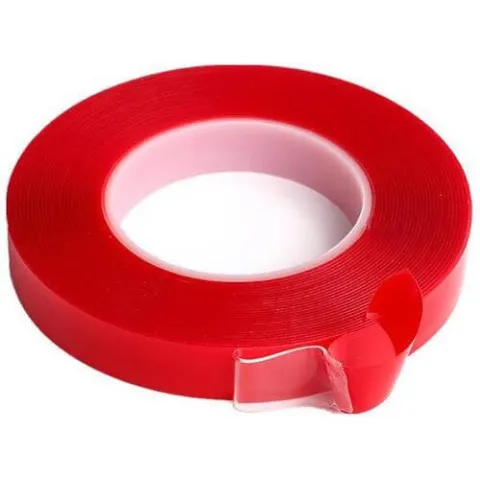
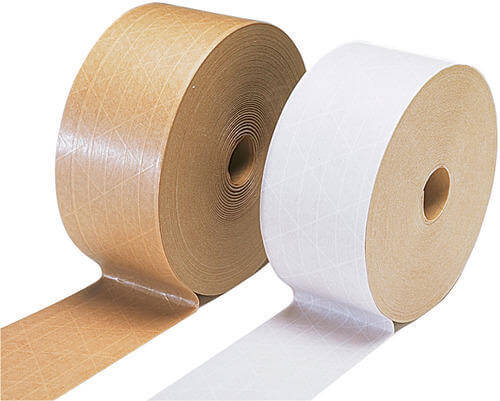
Acrylic foam tape and double sided tissue tape are commonly evaluated for mixed-material bonding, and transfer tape offers a thin adhesive-only layer for flat parts. Test each on your actual substrate.
Frequently asked questions
Why does my tape stick to the metal frame but not the plastic part?
The metal is a high surface energy material that the adhesive wets easily; many plastics, especially PP and PE, are low energy and resist wetting.
What are dyne pens used for?
They give a quick indication of a surface's energy: if the ink line stays continuous, the surface is at or above that ink's rating.
Can cleaning improve adhesion on polypropylene?
Cleaning removes contamination but does not change the plastic's inherent low surface energy; for that you need an LSE adhesive, a primer or surface treatment.
Are powder-coated surfaces easy to bond?
Not always. Some powder coats contain additives that make them behave like low-energy surfaces, so test on the actual finish.
Tell us the surface, temperature and job — we'll recommend a grade and share its data sheet.