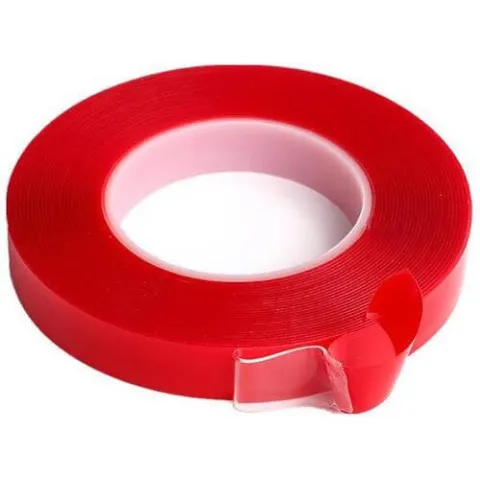
Why tape is used in industrial assembly
Adhesive tapes have moved far beyond packing and masking. Today they hold trims on vehicles, panels on buildings, displays in phones and insulation in motors. Compared with mechanical fasteners (screws, rivets, bolts, welds) and liquid adhesives, tapes offer a mix of design, production and appearance benefits.
The main benefits
Design and performance benefits
- Load spread over the whole area. A screw or rivet concentrates stress at a hole; a tape spreads it across the bonded area. This can let designers use thinner, lighter materials.
- Joins dissimilar materials. Glass to aluminium, plastic to painted steel, composites to wood — without drilling and without galvanic contact between metals.
- Absorbs movement. Foam and viscoelastic tapes take up differences in thermal expansion and damp vibration and noise.
- Seals while it bonds. A continuous tape line keeps out moisture, dust and air, acting as an environmental barrier.
- Insulates. Film tapes add electrical insulation; foam tapes add thermal and acoustic insulation.
- Consistent thickness. Tapes give a uniform bond line and can fill controlled gaps, unlike liquids that squeeze out or sag.
- Bonds smooth, hard-to-fix surfaces such as glass, where drilling is impractical.
- No corrosion points. Without drilled holes or exposed fastener heads, there are fewer places for water to enter and rust to start, and protective coatings stay intact.
Production benefits
- Faster assembly: no drilling, tapping, clamping or curing time; parts can often be handled immediately.
- Clean and simple: no mixing, no mess, no solvent fumes on the line.
- Flexible process: the tape can be applied to one part in advance — even at a supplier — and the second part bonded later, at a different time and place.
- Precise placement: die-cut tape parts fit exactly and repeatably.
- Fewer finishing steps: no grinding of weld marks or filling of screw holes.
Appearance benefits
- No visible fasteners, giving smooth, clean surfaces on signs, appliances and vehicles.
- No heat distortion of thin sheet, unlike welding.
- Clear tapes can bond transparent parts invisibly.
Typical applications that rely on these benefits
| Benefit | Example |
|---|---|
| Replaces mechanical fasteners | Vehicle emblems and trims, sign faces, panel stiffeners with Acrylic Foam Tape |
| Seals and insulates | Duct joints with Aluminium Foil Tape, window and glazing seals |
| Gap filling and cushioning | Gaskets and pads from Foam Tape |
| Thin, invisible bonding | Nameplates and graphics with Transfer Tape |
| Temporary protection | Masking and surface protection films |
Limits to plan around
Tape is not right for every joint, and most bonding problems trace back to a few predictable causes. Good design takes these points into account from the start, and a short trial on production parts confirms the choice before volumes ramp up:
- Surface preparation matters. Oil, dust, release agents and weak paint layers limit bond strength.
- Low surface energy plastics such as PP and PE need suitable adhesives or primers.
- Temperature limits depend on the adhesive; rubber adhesives soften sooner than acrylic or silicone.
- Creep under constant load. Joints should be designed mainly in shear, and safety-critical overhead loads may need mechanical backup.
- Dwell time. Many adhesives build strength over hours to days after application.
- Corners and edges. Peel starts at edges; rounded corners and full contact help.
Key takeaways
- Tapes spread load, join dissimilar materials, seal and damp vibration in one step.
- They speed up assembly and remove drilling, welding and finishing operations.
- They give cleaner-looking products with no visible fasteners.
- Design for clean surfaces, shear loading and the adhesive's temperature range.
Frequently asked questions
Can adhesive tape replace screws and rivets?
In many panel, trim and sign applications, yes — high-strength foam tapes spread load over the whole area. The joint should be designed for tape and tested on real parts.
What are the limitations of adhesive tapes?
Tapes need clean surfaces, suitable adhesives for low-energy plastics, attention to temperature range and time to build strength. Constant overhead loads may need mechanical backup.
Why do tapes help with dissimilar materials?
The adhesive layer separates the materials, avoiding galvanic contact between metals, and flexible tapes absorb different rates of thermal expansion.
Do tapes speed up assembly?
Yes. They remove drilling, clamping and curing steps, and parts can usually be handled straight after bonding.
Tell us the surface, temperature and job — we'll recommend a grade and share its data sheet.