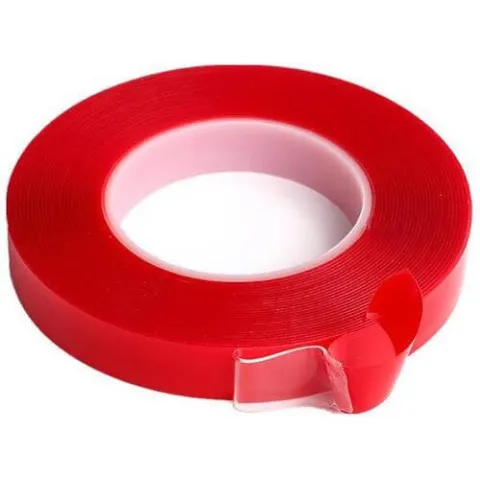
What is EVA foam tape?
EVA foam tape is a tape whose carrier is ethylene-vinyl acetate (EVA) foam — the same family of soft, rubbery closed-cell foam used in shoe soles and protective padding. The foam is coated with a pressure-sensitive adhesive on one or both sides and protected by a release liner.
The vinyl acetate content gives EVA foam a softer, more rubber-like feel than plain polyethylene foam, along with good flexibility at low temperatures and good cushioning. This makes EVA foam tape a practical, economical choice for sealing, padding and light-to-medium mounting work.
How it is constructed
- Foam carrier: closed-cell EVA, supplied in a range of thicknesses and densities. Higher density means a firmer, stronger foam; lower density means softer, more conformable foam.
- Adhesive: commonly a synthetic rubber or hot-melt rubber adhesive for high initial tack, or an acrylic adhesive for better heat, UV and ageing resistance.
- Format: single-sided (for seals and pads) or double-sided (for mounting).
- Liner: silicone-coated paper or film, often printed or coloured for identification.
- Colours: typically white, black or grey.
Because the foam is closed-cell, it does not soak up water the way open-cell sponge does, so it works well as a seal against dust, draughts and splashes.
Key properties
- Cushioning and shock absorption that protect parts and reduce rattle.
- Conformability over uneven or textured surfaces.
- Sealing against dust, light, air and moisture.
- Sound and vibration damping in panels and enclosures.
- Good low-temperature flexibility compared with many other foams.
- Easy to slit and die cut into strips, gaskets and pads.
Temperature performance depends mainly on the adhesive. Hot-melt rubber grades have very high initial grab but soften at elevated temperature, so they suit indoor, moderate conditions. Acrylic-adhesive grades are the better choice where heat or sunlight is expected.
Typical applications
- Sealing and gasketing: door and window seals, cabinet and enclosure gaskets, dust and light seals in appliances and lighting.
- Cushioning: anti-rattle and anti-slip pads, protective bumpers under equipment, glass and display cushioning.
- Mounting: nameplates, hooks, mirrors, signs, frames and decorative trims indoors.
- Electronics and appliances: fixing and cushioning internal components, foam pads for speakers and displays.
- Packaging and gifts: holding inserts and display items in boxes.
- Stationery and crafts: foam mounting dots and pads.
EVA versus other foam tapes
| Foam | Character | Typical strengths |
|---|---|---|
| EVA | Soft, rubbery, closed-cell | Cushioning, sealing, economical mounting |
| PE (cross-linked) | Firm, closed-cell, lightweight | Water resistance, general and automotive mounting |
| PU (polyurethane) | Resilient, recovers well | Gaskets and pads that are repeatedly compressed |
| Acrylic foam | Viscoelastic, dense | Structural, long-term outdoor bonding |
See SyncSol's Foam Tape range for EVA and PE options, and Acrylic Foam Tape for high-strength permanent bonding. For door and window gaps, Glazing Tape is also worth comparing.
Selection checklist
- What gap or unevenness does the foam need to fill? This sets thickness.
- Does the job need cushioning (softer, lower density) or holding strength (firmer, higher density)?
- Will it see heat, sunlight or outdoor weather? If so, prefer acrylic adhesive.
- Which surfaces are being bonded — painted metal, plastic, glass, powder coat?
- Rolls, slit strips or die-cut shapes?
Key takeaways
- EVA foam tape is soft, conformable and cost-effective for sealing, cushioning and mounting.
- Closed cells resist water and dust ingress.
- Rubber and hot-melt adhesives give strong initial grab; acrylic adhesives give better heat and weathering resistance.
- For structural or long-term outdoor loads, step up to acrylic foam tape.
Frequently asked questions
What is EVA foam tape made of?
It uses a closed-cell ethylene-vinyl acetate foam carrier coated on one or both sides with a pressure-sensitive adhesive, usually rubber, hot-melt or acrylic.
Is EVA foam tape waterproof?
The closed-cell foam resists water penetration, so it seals well against splashes and moisture. Long-term outdoor performance depends on the adhesive, with acrylic grades lasting better.
What is the difference between EVA and PE foam tape?
EVA foam is softer and more rubbery, so it cushions and conforms well. Cross-linked PE foam is firmer and lighter and is common for general and automotive mounting.
Can EVA foam tape handle heat?
That depends on the adhesive. Hot-melt rubber versions soften at elevated temperature, while acrylic-adhesive versions are better for warm environments.
Tell us the surface, temperature and job — we'll recommend a grade and share its data sheet.