The short answer
In many assemblies, yes. Acrylic foam tape is routinely used in place of screws, rivets, spot welds and liquid adhesives on vehicles, signs, appliances, façade panels and electronics. It is not a universal replacement, though: success depends on the substrates, surface preparation, the loads involved and the operating environment. This article explains why the tape works and how to judge whether it suits your job.
What makes acrylic foam tape different
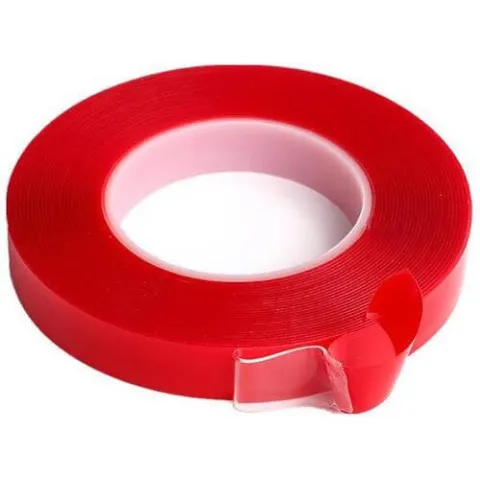
Ordinary double-sided tapes have a thin carrier with adhesive on each side. Acrylic Foam Tape is built around a viscoelastic acrylic foam core, often with the adhesive and core made from the same acrylic chemistry. That core behaves partly like a solid and partly like a very thick liquid:
- It flows into surface roughness, increasing real contact area.
- It spreads stress over the whole bonded area instead of concentrating it at drilled holes.
- It absorbs movement, including vibration, impact and the different thermal expansion of metal, glass and plastic.
Acrylic chemistry also brings good resistance to UV, ageing, moisture and many chemicals, which is why these tapes are used outdoors.
Advantages over mechanical fasteners
- No holes: panels are not weakened, and there is no entry point for water or corrosion.
- Continuous seal: the tape bonds and seals the joint in one step.
- Clean appearance: no visible screw heads or rivets, and no refinishing of weld marks.
- Thinner, lighter parts: stress is spread, so thinner sheet or mixed materials can be used.
- Dissimilar materials: glass to metal, plastic to painted steel, composites to aluminium.
- Vibration and noise damping: the foam core reduces rattle and drumming.
- Faster assembly: no drilling, tapping or curing time on the line.
Typical applications
- Automotive: body side mouldings, emblems, badges, spoilers, trims and interior panels.
- Construction and façades: stiffeners behind ACP cladding, curtain-wall and window components, panel fixing.
- Signs and displays: sign faces to frames, letters, stiffeners and point-of-sale displays.
- Appliances and electronics: panels, displays, handles and decorative trims.
- Transport and clean rooms: wall panels in buses, rail cars and clean-room systems.
When the tape is not enough on its own
- Low surface energy plastics such as PP and PE need a primer, surface treatment or a specially formulated grade.
- Continuous static load in peel or cleavage, especially overhead, can cause slow creep. Design the joint in shear where possible, and add mechanical backup for safety-critical overhead parts or where local building codes require it.
- High heat: typical grades handle long-term service up to roughly 90 ℃ with short peaks higher; check each grade's data sheet.
- Dirty, oily, painted-over or powdery surfaces limit the bond to the weakest layer.
Getting a reliable bond
- Clean both surfaces — a 50:50 mix of isopropyl alcohol and water is a common choice — and let them dry.
- Apply at a moderate temperature. Around 20–38 ℃ is ideal; applying below about 10 ℃ is generally not recommended because the adhesive becomes too firm to wet the surface.
- Apply firm pressure with a roller or press to bring the adhesive into full contact.
- Allow dwell time. Bond strength builds over time — a substantial share within the first hour, approaching full strength after about 72 hours at room temperature. Avoid loading the joint early.
- Test on the actual parts. Data-sheet values are measured on reference panels; your painted, coated or plastic surface may behave differently.
For lighter mounting with less demanding loads, Foam Tape based on PE or EVA foam can be more economical, and Double Sided Polyester Tape is preferred where a very thin bond line is needed.
Key takeaways
- Acrylic foam tape can replace screws, rivets and welds in a wide range of assemblies.
- Its viscoelastic core spreads stress and absorbs movement, so bonds often outperform point fixings.
- Surface preparation, pressure and dwell time decide the result.
- Keep mechanical backup for safety-critical overhead or high-temperature loads, and always test on real parts.
Frequently asked questions
Is acrylic foam tape as strong as screws or rivets?
For many panel and trim joints it performs as well or better because it spreads load over the whole bonded area. The joint must be designed for the tape, mainly in shear, and tested on real parts.
How long does acrylic foam tape take to reach full strength?
It forms a usable bond immediately, but strength keeps building as the adhesive flows into the surface, typically reaching close to full strength after about 72 hours at room temperature.
Does acrylic foam tape stick to plastics?
It bonds well to many plastics such as ABS, PC and acrylic. Low surface energy plastics like PP and PE usually need a primer or a special grade.
Can acrylic foam tape be used outdoors?
Yes. Acrylic adhesive resists UV, moisture and ageing well, which is why it is used on vehicle exteriors, signs and façade panels.
Tell us the surface, temperature and job — we'll recommend a grade and share its data sheet.