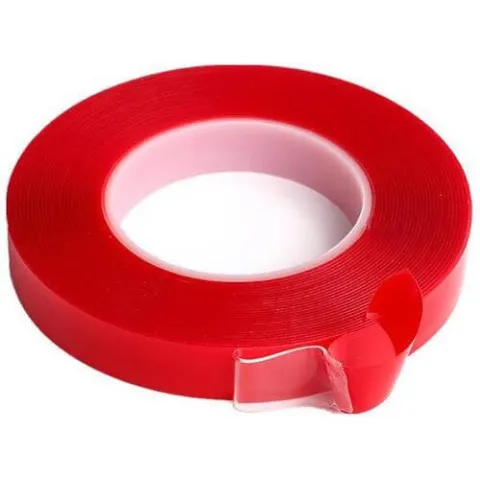
Choosing a tape by width and price alone is the most common reason a job goes wrong. A tape is a system — backing, adhesive and sometimes a liner — and each part has to suit the surfaces, the conditions and the length of time the bond must last. Work through the questions below in order and you will narrow a long list down to two or three candidates worth testing.
Step 1: Identify both substrates
Write down exactly what the tape will touch on each side: mild steel, powder-coated aluminium, glass, ABS, polypropylene, corrugated board, painted plaster and so on. Note the finish too — textured, oily, porous or freshly painted surfaces all behave differently. If the tape bonds two different materials, the harder-to-bond one decides the adhesive.
Step 2: Check the surface energy
Adhesives stick well to high surface energy (HSE) materials such as metals and glass, and struggle on low surface energy (LSE) plastics such as polyethylene and polypropylene. If either substrate is LSE, look for an adhesive formulated for it, or plan a primer or surface treatment. Our article on surface energy explains this in detail.
Step 3: Define the temperature profile
Separate three numbers: the temperature during application, the normal service temperature, and any short peaks (an oven bake, a hot wash, a summer roof). Natural rubber adhesives are generally suited to moderate temperatures, acrylics to higher continuous use, and silicones to the hottest jobs. Also check the low end — cold stiffens most adhesives.
Step 4: Consider the environment
Will the joint see UV, rain, humidity, solvents, oils, cleaning chemicals or salt spray? Outdoor and chemical exposure usually point towards acrylic adhesives and stable backings such as polyester, aluminium foil or cross-linked foams rather than paper or general-purpose rubber systems.
Step 5: Work out the load
Ask how the joint is stressed. A constant dead load (a sign hanging on a wall) needs good shear resistance. A load that tries to lift the edge needs good peel strength. Vibration and thermal movement favour a conformable foam that can absorb stress. Size the bonded area to the load, and never rely on a single small patch for anything safety-related.
Step 6: Decide permanent or removable
Masking, surface protection and temporary holding call for clean removal after a known period. Structural mounting calls for a bond that builds over time. State how long the tape stays on and whether it must come off without residue — that single answer rules out many products.
Step 7: Measure thickness and gap
A flat-to-flat bond can use a thin film or tissue carrier. Uneven or curved parts need a thicker, softer foam that fills the gap so the adhesive actually touches both surfaces. Measure the worst-case gap and choose a tape that can close it under normal hand or roller pressure.
Step 8: Check regulatory and customer requirements
Some sectors need flame-retardant ratings, electrical insulation classes, food-contact or low-VOC status, or specific halogen limits. Confirm what your customer or code actually requires and ask for the matching data sheet before testing.
Summary table
| Question | Why it matters | Typical direction |
|---|---|---|
| Substrates | Sets adhesive chemistry | Rubber for paper/board, acrylic for metal and many plastics |
| Surface energy | Controls wetting and bond | LSE plastics need modified adhesive or primer |
| Temperature | Adhesive softens or hardens | Rubber → moderate, acrylic → higher, silicone → highest |
| Environment | UV, moisture, chemicals | Acrylic adhesive with film or foil backing |
| Load type | Shear, peel or dynamic | Foam for vibration, film for thin static bonds |
| Removability | Clean release or permanent | Low-tack masking vs high-strength mounting |
| Gap/thickness | Contact area | Foam for uneven parts, film for flat |
| Regulation | Compliance | Request certificates and data sheets |
Key takeaways
- Define the job first, then look at products.
- The most difficult substrate and the hottest peak temperature usually decide the tape.
- Always test on real parts, under real conditions, before committing to volume.
For common starting points, see double sided polyester tape for thin flat bonds, acrylic foam tape for mounting and gap-filling, and masking tape for temporary protection.
Frequently asked questions
What is the single most important factor when choosing a tape?
Usually the substrates, because they decide which adhesive chemistry can wet and bond them. Temperature and load come next.
Can one tape work for every job in a plant?
Rarely. A general-purpose tape may suit light duties, but outdoor, high-temperature, LSE plastic or structural jobs each need a tape chosen for them.
Do I still need to test if the data sheet looks right?
Yes. Data sheet values are measured on standard test panels, so a trial on your actual parts, finishes and conditions is the only reliable confirmation.
How do I describe my application when asking for a recommendation?
Give both substrates, the surface finish, the temperature range, exposure conditions, the load, how long the tape must stay on and any compliance needs.
Tell us the surface, temperature and job — we'll recommend a grade and share its data sheet.