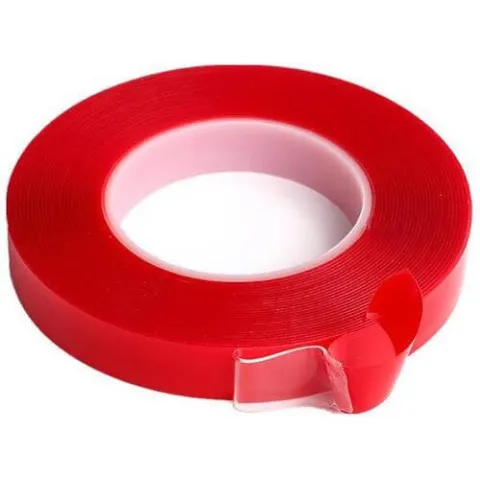
A well-chosen tape can still fail if it is applied badly. Pressure-sensitive adhesives need clean surfaces, firm contact and a little time to reach full strength. The steps below apply to most single- and double-sided industrial tapes; always follow any specific instructions on the product data sheet.
1. Prepare the surface
Contamination is the leading cause of poor adhesion. Dust, oil, fingerprints, moisture, mould release and loose paint all stop the adhesive reaching the real surface.
- Clean with isopropyl alcohol (IPA) — a mix of about 70% IPA and 30% water is widely recommended — using a clean, lint-free cloth. Wipe in one direction and change to a fresh part of the cloth often.
- Dry completely. Allow the solvent to evaporate before applying tape; trapped alcohol or water weakens the bond.
- Remove dust from porous or freshly cut surfaces. Very porous materials such as concrete or unsealed wood may need a sealer or primer.
- Degrease heavily oiled metal first with a suitable degreaser, then finish with IPA to remove any residue.
Do not use household cleaners or glass sprays that leave silicone or surfactant films.
2. Check the temperature
The ideal application range for most tapes is normal room temperature, roughly 20–38 ℃. Below about 10–15 ℃ many adhesives are too firm to wet the surface, so initial contact is weak. If parts come in from cold storage, let them warm up and make sure there is no condensation on them. Store the tape itself at room temperature before use.
3. Apply without stretching
Lay the tape on the surface rather than pulling it tight. Stretched tape tries to recover its original length, which pulls the edges back and causes lifting or flagging, especially on PVC, foam and film tapes. On curves, guide the tape around gently and use a more conformable product if it keeps wrinkling.
For double-sided tapes, apply to the first surface, roll it down, then remove the liner only when ready to join the second part. Avoid touching the exposed adhesive.
4. Apply firm, even pressure
Bond strength depends on how much of the adhesive actually contacts the surface. Firm pressure pushes the adhesive into the microscopic texture of the substrate.
- Use a hand roller or squeegee rather than fingertip pressure.
- Work from the centre outwards to push out air.
- A commonly quoted target for foam mounting tapes is around 100 kPa (about 15 psi) across the bond.
- Pay extra attention to edges and ends — that is where lifting starts.
5. Allow dwell time
A pressure-sensitive bond keeps getting stronger after application as the adhesive flows into the surface. For high-strength acrylic tapes a typical pattern is about half of final strength after 20 minutes, around 90% after 24 hours and full strength after about 72 hours at room temperature. Warmth speeds this up; cold slows it. Where possible, avoid putting a heavy or peeling load on the joint until it has had time to build.
6. Cut cleanly
Use sharp blades or proper dispensers. Ragged ends lift easily and can trap dirt. On packing and carton tapes, leave a short tail folded over the edge for grip. For foam tapes, cut rather than tear to avoid stretching the foam.
Common mistakes to avoid
| Mistake | Result |
|---|---|
| Applying over dust or oil | Weak bond, early failure |
| Applying to a cold or damp surface | Poor wetting, edge lift |
| Stretching the tape | Edge curl and shrink-back |
| Light finger pressure only | Low contact area |
| Loading immediately | Creep or slip before bond builds |
Key takeaways
Clean, dry, warm, press and wait. Those five words cover most installations. For mounting work, see acrylic foam tape and foam tape; for flat laminations, double sided tissue tape is a frequent choice.
Frequently asked questions
What should I clean the surface with?
A mix of roughly 70% isopropyl alcohol and 30% water on a lint-free cloth suits most surfaces; heavy oil should be removed with a degreaser first.
How long before the tape reaches full strength?
For many acrylic tapes, about 90% of final strength builds in 24 hours and full strength in around 72 hours at room temperature.
Why do the edges of my tape lift?
Usually because the tape was stretched during application, the edges were not pressed firmly, or the surface was contaminated or cold.
Does pressing harder really make a difference?
Yes. Pressure-sensitive adhesives need pressure to flow into the surface texture; a roller gives much more contact than a fingertip.
Tell us the surface, temperature and job — we'll recommend a grade and share its data sheet.