Why foil tapes are used on ducts and insulation
Heating, ventilation and air-conditioning (HVAC) systems lose energy and efficiency through leaking joints and damaged insulation facings. Foil tapes close those joints and repair those facings. Aluminium foil is impermeable to water vapour, reflects radiant heat, does not rot, and keeps a neat metallic finish that matches foil-faced insulation. Combined with a well-chosen adhesive, it forms a durable seal on sheet-metal ducts, flexible ducts, pipe insulation and insulation boards.
The three main constructions
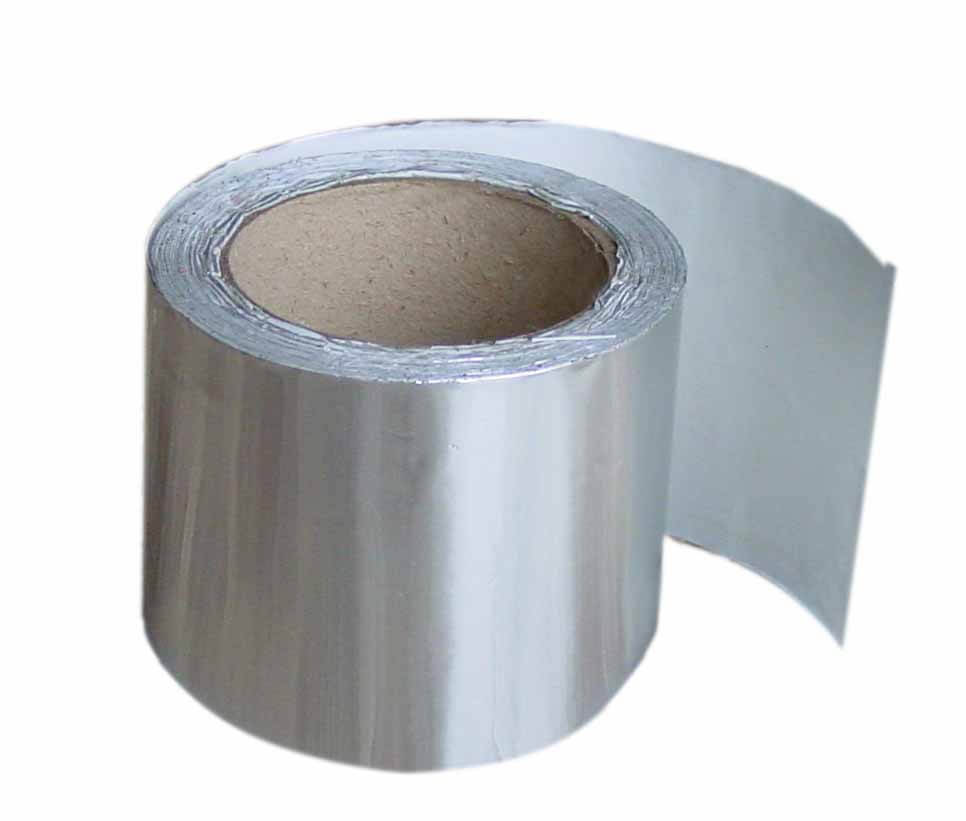
Plain aluminium foil tape
Aluminium foil tape is a soft aluminium foil coated with a pressure-sensitive adhesive, usually acrylic, on a release liner. It conforms well to curves and seams, can be smoothed flat with a squeegee, and is used for sealing duct joints, repairing foil facings, heat shielding and moisture-proofing.
Aluminium glass-fibre tape
Aluminium glass fiber tape laminates foil to a glass-fibre fabric or scrim. The glass adds tear and puncture resistance and dimensional stability, making the tape suitable where the joint sees movement, handling or abrasion, and for wrapping pipe and duct insulation.
FSK tape (foil–scrim–kraft)
FSK tape mirrors the facing used on many insulation products: aluminium foil, a reinforcing scrim (often a glass-fibre mesh) and kraft paper laminated together. It matches FSK-faced fibreglass and mineral wool insulation, so it is the natural choice for sealing the seams and butt joints of those boards and blankets, keeping the vapour barrier continuous.
| Tape | Main strength | Typical use |
|---|---|---|
| Aluminium foil | Conformability, low cost | Duct joints, foil-facing repair, heat shielding |
| Aluminium glass-fibre | Tear and puncture resistance | Pipe and duct insulation, high-handling areas |
| FSK | Matches FSK insulation facings | Seams and joints in faced insulation |
Vapour barrier and reflectivity
On chilled-water pipes and cold air ducts, the main enemy is condensation. Warm, moist air that reaches the cold surface condenses, soaks the insulation and eventually causes corrosion, mould and loss of insulating value. The insulation's facing acts as a vapour retarder, and any unsealed seam is a weak point. A foil tape that bonds continuously along each seam keeps that barrier intact.
The bright aluminium surface also reflects a large share of radiant heat and has low emissivity, which helps in heat-shielding and in reducing radiant gain on exposed ducts. Dust, paint or oxidation lower this effect, so the tape works best kept clean.
In many building projects, duct closure tapes and insulation facings are also expected to meet fire performance tests — for example surface-burning characteristics tested under ASTM E84 / UL 723, or the UL 181 series for closure systems used on rigid and flexible ducts. Specifiers should check which listing their project requires.
Cold-weather acrylic adhesives
Standard acrylic adhesives give excellent long-term ageing and heat resistance, but they can be slow to grab when applied in cold conditions. Cold-weather acrylic formulations are designed to tack and wet out at low application temperatures — useful for outdoor ductwork, cold rooms and winter installation. Note the difference between application temperature (the range in which the tape can be applied) and service temperature (the range it withstands once bonded); data sheets give both, and both should match the job.
The liner
Almost all foil tapes come on a release liner, typically silicone-coated paper or film. The liner protects the adhesive and stops the soft foil from sticking to itself in the roll. In practice:
- Peel the liner progressively as you apply, not all at once, to avoid wrinkles and contamination.
- Split-back or easy-release liners speed up installation on long runs.
- Keep removed liner off the work area — it is slippery and a common site hazard.
How to apply foil tape on ducts
- Clean the surface. Remove dust, oil and moisture; wipe sheet metal with a suitable cleaner and let it dry.
- Work within the application range. In cold weather, use a cold-weather grade or warm the surface and the roll.
- Centre the tape over the seam. Leave enough width on each side of the joint for a secure bond.
- Apply without stretching. Lay the tape down and peel the liner back as you go.
- Squeegee firmly. Use a plastic squeegee to press out air and wrinkles; on embossed or reinforced facings, rub until the pattern shows through the foil.
- Overlap ends. Overlap tape ends and avoid tension at corners and edges.
- Inspect. Look for channels, fish-mouths or lifted edges and re-press or re-tape them.
Key takeaways
- Plain foil for conformability, foil–glass-fibre for toughness, FSK for matching faced insulation.
- Continuous sealing protects the vapour barrier and prevents condensation damage.
- Check both application and service temperature; choose cold-weather acrylic for low-temperature installation.
- Clean surfaces and firm squeegee pressure make the biggest difference to a lasting seal.
Frequently asked questions
What does FSK stand for?
Foil–scrim–kraft: an aluminium foil, a reinforcing scrim and kraft paper laminated together. FSK tape matches FSK-faced insulation.
Why is a squeegee needed for foil tape?
Foil does not conform as easily as fabric. Firm squeegee pressure removes air channels and wrinkles so the adhesive makes full contact and the seal stays continuous.
Can foil tape be applied in cold weather?
Standard acrylics can be slow to bond when cold. Use a cold-weather acrylic grade, or warm the surface and roll, and stay within the stated application temperature.
Does foil tape act as a vapour barrier?
Aluminium foil is essentially impermeable to water vapour, so a continuously bonded foil tape keeps the insulation's vapour barrier intact across seams.
Tell us the surface, temperature and job — we'll recommend a grade and share its data sheet.