One name, two opposite behaviours
"Heat-sensitive tape" is a loose term. In industry it is used for two kinds of tape that react to heat in opposite ways:
- Heat-activated tapes have little or no tack at room temperature and start bonding when heated.
- Thermal-release tapes hold firmly at room temperature and stop bonding when heated to a set temperature.
Both are specialist products. They are different from ordinary heat-resistant tapes, which are simply designed to keep holding at high temperature. Mixing up these three ideas is a common cause of wrong orders, so it is worth stating clearly which behaviour is needed.
Heat-activated tapes
A heat-activated tape carries a thermoplastic or reactive adhesive that is dry and non-tacky at normal temperature. When heat and pressure are applied, the adhesive softens or melts, wets the surface and then forms a bond as it cools — or, in reactive grades, as it cures.
Why use them
- Parts can be positioned and adjusted before bonding, because nothing sticks until heat is applied.
- No tacky surface to collect dust or fluff during storage and handling.
- Strong bonds to surfaces that ordinary pressure-sensitive tapes find difficult, including some rubbers, EPDM profiles and certain plastics.
- Thin, controlled bond lines in electronics, such as fixing flexible circuits.
Where they are used
- Packaging: heat-seal tear strips that let a wrapper be opened cleanly.
- Automotive: attaching rubber seals and profiles, and some trim parts.
- Electronics: bonding flexible circuits and components.
- Textiles and apparel: hemming and seam bonding with heat-press films.
- Bookbinding and lamination.
Process requirements: each product has a recommended activation temperature, pressure and time. Heating equipment — heat presses, hot-air tools, heated rollers or hot-bar presses — is needed, and the parts must tolerate the activation heat.
Thermal-release tapes
A thermal-release tape uses an adhesive containing additives that expand or change when heated past a design temperature. Below that point the tape holds parts firmly; above it, the adhesive loses its grip and the part can be lifted off with little or no force and no residue.
Where they are used
- Semiconductor and electronics processing: temporarily fixing wafers, ceramic parts and components during dicing, grinding or other machining, then releasing them without stress.
- Precision part handling where peeling force could damage delicate items.
Heat-sensitive versus heat-resistant
These are often confused:
| Type | Behaviour with heat | Typical example |
|---|---|---|
| Heat-activated | Becomes tacky and bonds | Heat-seal and heat-bond films |
| Thermal-release | Loses tack and releases | Wafer and component fixing |
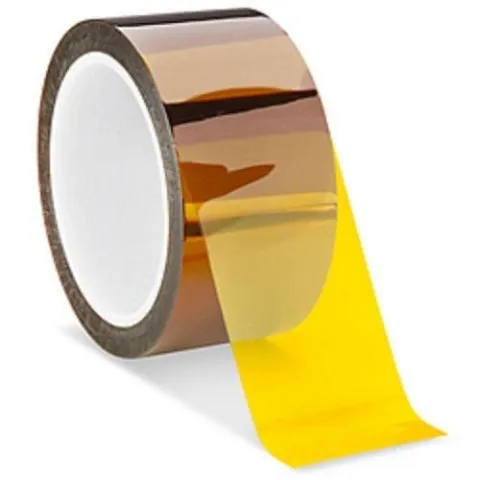
| Heat-resistant | Keeps holding at high temperature | Polyimide solder-masking tape |
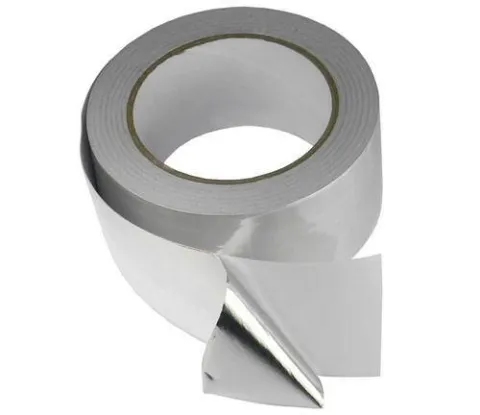
If you need a tape that simply survives heat — for soldering, powder coating or insulation — look at heat-resistant options such as Polyamide Tape (polyimide film with silicone adhesive), Aluminium Glass Fiber Tape or Aluminium Foil Tape.
Selection checklist
Before asking for samples, it helps to answer a few questions, because the right product family depends entirely on what the heat is supposed to do:
- Do you need the tape to bond with heat, release with heat, or survive heat?
- What temperature can your parts tolerate?
- What equipment do you have for applying heat and pressure?
- Which surfaces are being bonded or held?
- How clean must the part be after release?
Key takeaways
- Heat-activated tapes bond when heated and are non-tacky until then.
- Thermal-release tapes hold until heated and then let go cleanly.
- Neither is the same as heat-resistant tape, which keeps holding at high temperature.
- Activation or release temperatures vary by product, so follow the data sheet.
Frequently asked questions
What is heat-activated tape?
A tape whose adhesive is non-tacky at room temperature and bonds only when heated and pressed, then gains strength as it cools or cures.
What is thermal-release tape used for?
It temporarily holds parts such as wafers or ceramic components during processing, then releases them cleanly when heated past its release temperature.
Is heat-sensitive tape the same as heat-resistant tape?
No. Heat-sensitive tapes change behaviour when heated, while heat-resistant tapes such as polyimide tape are designed to keep holding at high temperature.
Tell us the surface, temperature and job — we'll recommend a grade and share its data sheet.