Electronic parts turn some of their power into heat. If that heat cannot escape, components run hot, age faster and may fail. A thermal conductive tape does two jobs at once: it bonds a heat source to a heat sink or metal chassis, and it provides a path for heat to flow between them. That combination removes the need for clips, screws or a separate adhesive in many light-duty designs.
What W/m·K means
Thermal conductivity is the ability of a material to carry heat. It is measured in watts per metre-kelvin (W/m·K): the heat in watts that flows through a one-metre-thick layer with a one-square-metre area when there is one degree of temperature difference across it. A higher number means heat moves more easily.
For perspective, ordinary polymers and adhesives are insulators, typically around 0.1 to 0.5 W/m·K, while metals are far higher: aluminium and copper are in the hundreds. A thermal tape sits between these, much better than plain adhesive but far below metal.
Conductivity alone does not tell you the whole story. What matters in a real joint is thermal resistance, which depends on:
- Thickness: a thinner layer resists heat flow less, so halving thickness can matter as much as raising conductivity.
- Contact area: air gaps and poor wetting add resistance.
- Contact pressure: firm pressure improves contact with both surfaces.
How fillers create conductivity
Thermal tapes use an adhesive, usually acrylic or silicone, filled with thermally conductive particles. Common fillers are ceramics such as aluminium oxide (alumina), boron nitride and aluminium nitride. These ceramics conduct heat well but are electrical insulators. The particles form paths for heat through the adhesive, so more filler generally means higher conductivity, but too much filler makes the adhesive stiff and reduces tack. Tape design is therefore a balance between thermal performance and adhesion.
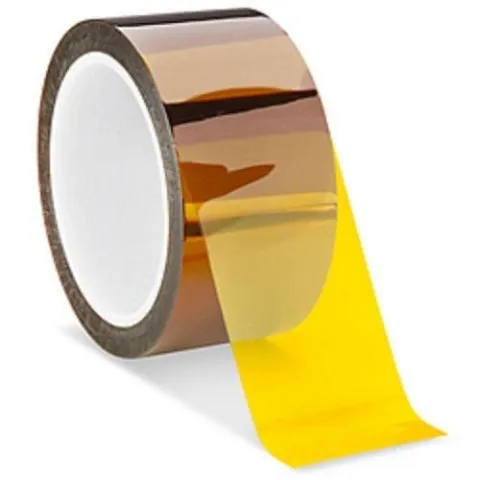
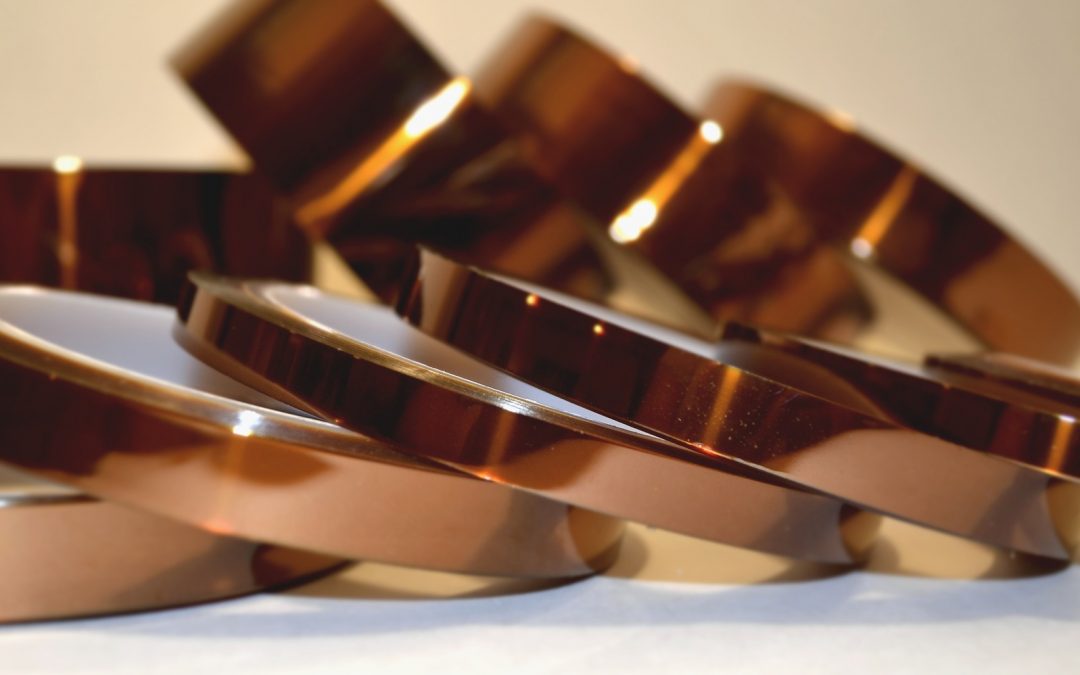
Some tapes also have a carrier such as glass fibre cloth, polyimide film or aluminium foil to add strength, cut-through resistance or handling stability.
Electrical insulation
Because ceramic fillers do not conduct electricity, many thermal tapes are also electrical insulators. This is important when a component must be isolated from a metal heat sink. Check the dielectric strength or breakdown voltage on the data sheet, and remember that carriers such as glass cloth or film help resist puncture by burrs or sharp leads. Tapes with metal or carbon-based fillers may conduct electricity and must not be used where insulation is needed.
Typical applications
- Bonding LED strips and LED boards to aluminium profiles and heat sinks
- Attaching heat sinks to processors, chips, power transistors and voltage regulators
- Fixing battery cells or modules to cooling plates in small assemblies
- Mounting power supplies and driver boards to metal housings
- Bonding thin heat spreaders in displays and consumer devices
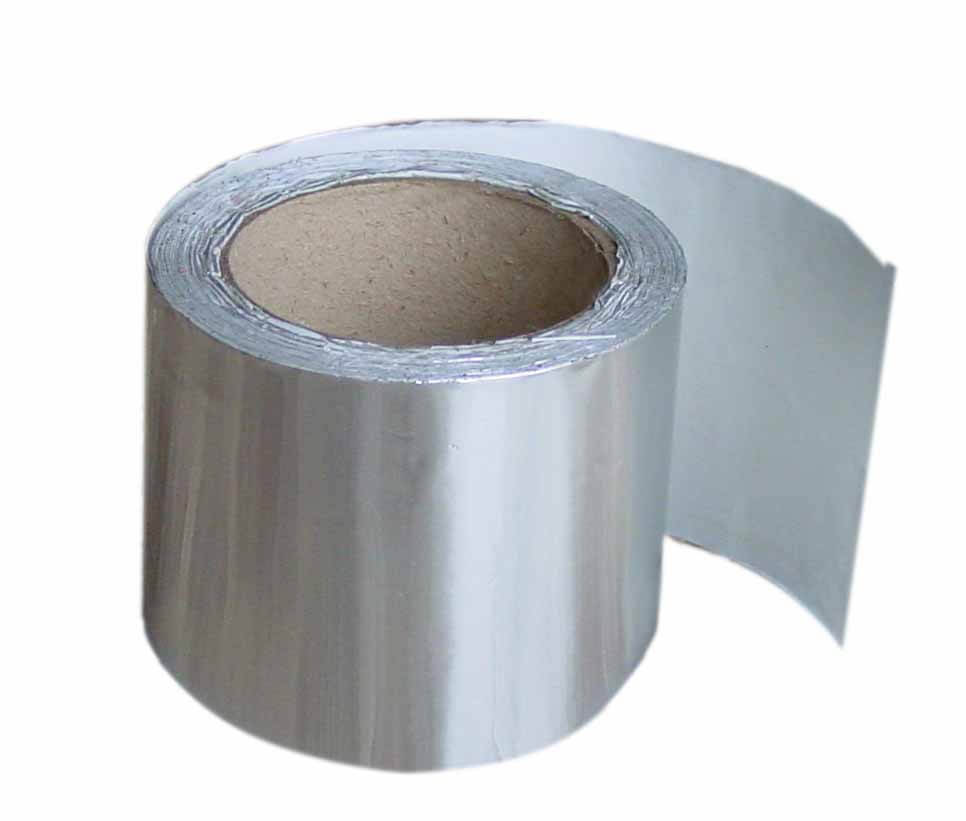
Thermal Conductive Tape is most useful where parts are flat, the heat load is moderate and a simple, clean assembly method is wanted. For reflecting radiant heat or shielding, Aluminium Foil Tape is a different tool: it is not designed to transfer heat across a bonded joint. Where electrical insulation at high temperature is the main concern, Polyamide Tape is often used alongside thermal materials.
Tape versus thermal paste and pads
| Option | Strengths | Limitations |
|---|---|---|
| Thermal tape | Bonds and conducts in one step; clean, fast assembly; no mess | Lower conductivity than many pastes; needs flat surfaces; harder to rework |
| Thermal paste or grease | Very thin layer; high performance; fills microscopic roughness | Needs clips or screws; can pump out or dry; messy to apply |
| Thermal pad | Fills larger gaps and tolerances; soft and reusable in some cases | Needs mechanical fixing; thicker layer adds resistance |
Choose tape for moderate heat and simple assembly, paste for high heat loads with mechanical clamping, and pads where gaps are uneven.
Application tips
- Make sure both surfaces are flat, clean and free of oil.
- Apply with firm pressure across the whole area to remove trapped air.
- Avoid repositioning once contact is made; each lift reduces bond quality.
- Do not load or heat the joint until the adhesive has built strength.
- Check the service temperature range against the actual component temperature.
Key takeaways
- W/m·K measures how well the material conducts heat; thin, well-pressed layers lower real thermal resistance.
- Ceramic fillers give conductivity while keeping the tape electrically insulating.
- Tape suits LEDs, small heat sinks and moderate loads where easy assembly is valued.
- For high heat loads or uneven gaps, consider paste or pads instead.
Frequently asked questions
What does W/m·K mean on a thermal tape data sheet?
It is thermal conductivity, the rate at which heat passes through the material. Higher numbers mean better heat transfer, but thickness and contact quality also affect real performance.
Is thermal conductive tape electrically insulating?
Most are, because they use ceramic fillers such as alumina or boron nitride that do not conduct electricity. Always check the dielectric strength on the data sheet, as tapes with metal or carbon fillers may conduct.
Is thermal tape better than thermal paste?
Not in raw conductivity; paste usually performs better. Tape is chosen because it bonds and conducts in one step without clips or screws, which suits moderate heat loads.
Can thermal tape fill large gaps?
No. It works best between flat surfaces in close contact. For uneven gaps, a soft thermal pad is more suitable.
Tell us the surface, temperature and job — we'll recommend a grade and share its data sheet.