Backing versus carrier
Every tape has an adhesive, and most have a supporting layer as well. On a single-sided tape that layer is called the backing (or facestock): it is the face you see and handle. On a double-sided tape the supporting layer sits between two adhesive coats and is called the carrier. Some tapes, such as transfer tapes, have no carrier at all.
The backing decides most of a tape's physical behaviour — tensile strength, stretch, conformability, thickness, tear behaviour, heat and chemical resistance, and whether the tape can be torn by hand.
Common backing materials
Paper backings
- Flat paper: smooth and printable; used for labels, splicing and general paper tapes.
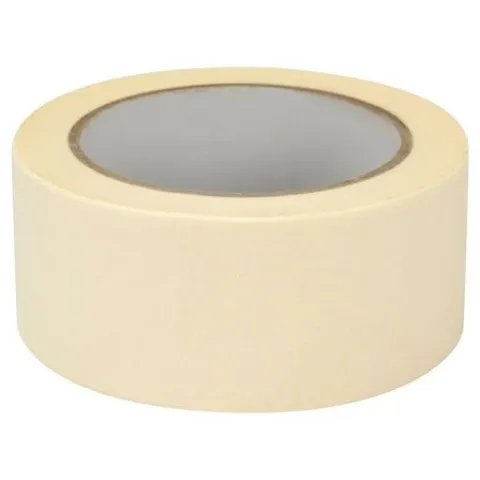
- Crepe paper: finely wrinkled paper that stretches around curves and tears cleanly by hand — the backing of Masking Tape and most crepe paper tapes.
- Kraft paper: strong, brown paper for carton sealing and splicing; also the base of water-activated gummed tape.
Plastic film backings
- BOPP (biaxially oriented polypropylene): light, strong and economical — the standard for carton sealing. See BOPP Tape.
- PET / polyester: dimensionally stable, thin, strong and good to moderately high temperatures; used for splicing, insulation and as a double-sided carrier. See Polyester Tape.
- PVC / vinyl: flexible, stretchy and abrasion-resistant; used for electrical insulation, floor marking and colour coding.
- PE (polyethylene): soft and conformable; common for surface protection films.
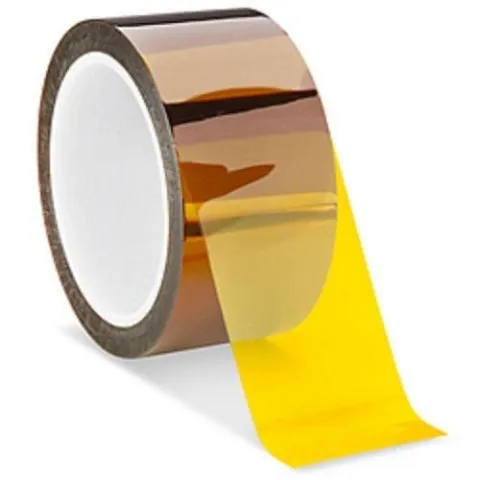
- Polyimide: stays stable at soldering temperatures and has high dielectric strength; used for PCB masking and high-temperature insulation.
- PTFE and other fluoropolymers: very low friction, non-stick and chemically resistant; used on heat-sealing jaws, rollers and chutes.
Fabric and fibre backings
- Cloth: woven cotton or polyester-cotton gives high strength, conformability and hand-tearability. Used in bookbinding, bundling and protection. See Cloth Tape.
- Glass cloth: woven fibreglass for high-temperature and flame-resistant applications.
- Nonwoven / fleece: soft, quiet and abrasion-resistant; used for automotive harness wrapping and anti-rattle duty.
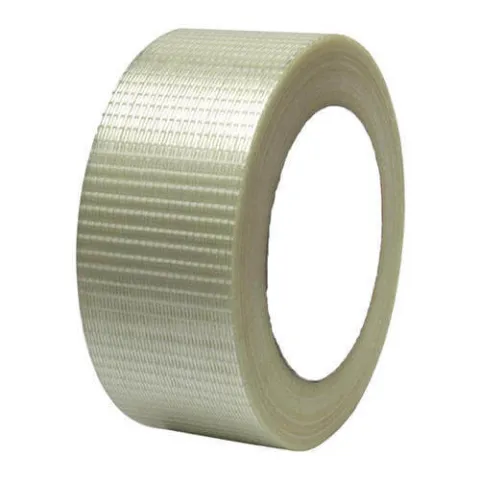
- Filament reinforcement: glass or polyester yarns embedded in the adhesive under a film give very high tensile strength for strapping and bundling. See Filament Tape.
- Tissue: a very thin nonwoven carrier for double-sided tapes, easy to handle and tear.
Foam backings
Closed-cell PE, EVA, PU and acrylic foams provide thickness, cushioning, gap filling and sealing. They are used for mounting, gasketing and weather-stripping. Acrylic foam doubles as the adhesive in high-strength bonding tapes.
Metal foil backings
- Aluminium foil: reflects heat and light, acts as a vapour and moisture barrier and resists flame. Used on HVAC ducts and insulation joints. It can be reinforced with glass scrim or laminated to kraft paper.
- Copper foil: conductive; used for EMI shielding and grounding.
- Lead foil: a dense, conformable foil historically used for masking in plating and for some radiation-shielding applications.
Rubber and silicone backings
Rubber-based backings make conformable, self-fusing tapes for electrical insulation and sealing. Silicone rubber backings survive high heat and are used for gaskets, press pads and self-fusing silicone tapes.
No carrier at all
Transfer tapes are an adhesive film supplied on a release liner, with no backing. After transfer the bond line is very thin and conforms closely to the surfaces. A release liner — paper or film coated with silicone — protects the adhesive until use. On double-sided products it is often coated so that one side releases more easily than the other (differential release).
Key takeaways
- The backing or carrier controls strength, stretch, heat resistance and handling.
- Paper suits masking and sealing; films suit packaging and insulation; cloth and filament add strength.
- Foams cushion and seal; foils reflect heat and block vapour.
- Transfer tapes have no carrier and give the thinnest possible bond line.
Frequently asked questions
What is the difference between a backing and a carrier?
Backing usually refers to the outer layer of a single-sided tape. Carrier refers to the middle layer of a double-sided tape that supports adhesive on both faces.
Which backing is best for high temperatures?
Polyimide film, glass cloth and PTFE handle the highest temperatures; polyester and aluminium foil suit moderately high temperatures.
Why do some tapes have no backing?
Transfer tapes are adhesive only, which gives a very thin, conformable bond line for nameplates, graphics and laminating.
Why is crepe paper used for masking tape?
The crinkled paper stretches around curves, tears cleanly by hand and lets paint lines stay sharp.
Tell us the surface, temperature and job — we'll recommend a grade and share its data sheet.