This glossary explains the words you will meet on tape data sheets, quotations and specifications. Terms are grouped alphabetically. Links point to related SyncSol tape pages where useful.
A–C
Acrylic adhesive
A pressure-sensitive adhesive based on acrylic polymers. Known for good ageing, UV and temperature resistance; bond strength builds over time after application.
Adhesion
The attraction between an adhesive and the surface it touches. Measured in practice through peel and tack tests.
Adhesive failure
A failure in which the adhesive separates cleanly from one surface, showing that it did not grip that surface well.
Adhesion promoter
See primer.
Backing (carrier)
The film, paper, cloth, foil or foam that carries the adhesive. It decides much of the tape's strength, stretch, conformability and temperature resistance.
Bleeding (oozing)
Adhesive squeezing out from the roll edges, usually from heat or excessive stacking pressure.
Bond build-up
The increase in bond strength with time after application as the adhesive flows into the surface.
Cohesion
The internal strength of the adhesive itself — its resistance to splitting.
Cohesive failure
A failure in which the adhesive splits, leaving adhesive on both surfaces.
Conformability
The ability of a tape to follow curves, edges and uneven surfaces without lifting.
Core
The cardboard or plastic tube on which tape is wound, specified by inner diameter, for example 76 mm (3 inch).
Corona treatment
An electrical discharge treatment that raises the surface energy of plastic films to improve wetting.
Creep
Slow movement of a bonded joint under constant load over time.
Cross-linking
Chemical bonds formed between polymer chains, increasing heat and shear resistance of an adhesive.
D–H
Die-cut
A tape shape punched from a roll or sheet with a cutting die, such as gaskets or pads.
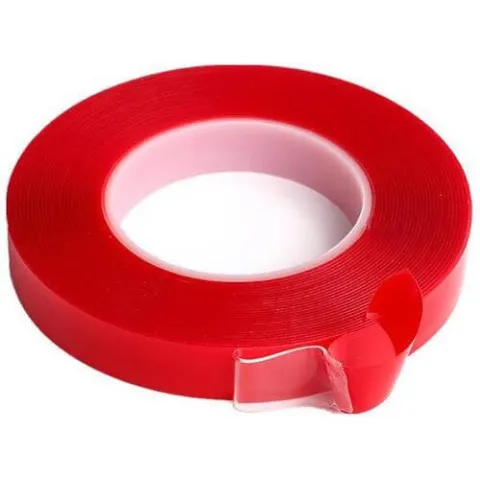
Double-sided tape
A tape with adhesive on both faces, usually supplied on a release liner. See double sided tissue tape.
Dwell time
The time a tape is left in contact with a surface before testing or loading.
Elongation
How far a tape stretches before it breaks, expressed in %.
Flagging
A tape end lifting away from the surface, often seen on wire or cable wraps.
Gap filling
The ability of a thicker or softer tape to bridge irregular surfaces.
Holding power
See shear.
Hot melt adhesive
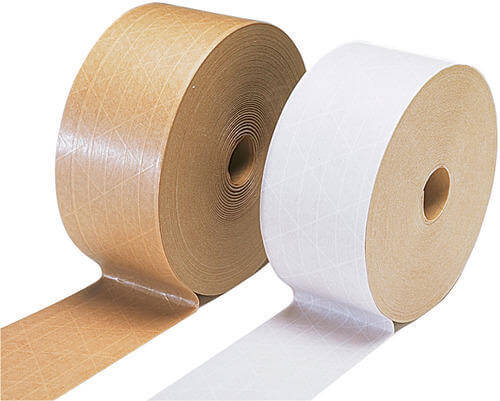
An adhesive applied molten and solidifying on cooling; common on packing tapes.
HSE (high surface energy)
Surfaces such as metals and glass that adhesives wet easily.
K–P
Kiss-cut
A cut through the tape and adhesive but not the liner, so parts stay on the liner for easy picking.
Liner (release liner)
The silicone-coated paper or film protecting the adhesive until use.
Log roll
A long roll of tape before it is slit into narrower finished rolls.
Loop tack
A tack test in which a loop of tape is briefly brought into contact with a panel.
LSE (low surface energy)
Surfaces such as polypropylene and polyethylene that resist wetting and are difficult to bond.
Masking
Covering an area to protect it during painting, coating or processing. See masking tape.
Natural rubber adhesive
A rubber-based adhesive with high initial tack, generally suited to moderate temperatures.
Peel adhesion
The force needed to remove a tape from a surface at a set angle and speed, often in N/25 mm.
Plasticiser migration
Movement of plasticisers from flexible PVC into an adhesive, softening it.
Primer
A liquid applied to a surface before taping to improve adhesion, especially on LSE plastics.
PSA (pressure-sensitive adhesive)
An adhesive that bonds with light pressure alone, without heat, water or solvent activation.
R–S
Release coating
The low-energy coating, usually silicone, on a liner or tape back that lets the adhesive unwind.
Residue
Adhesive left behind after a tape is removed.
Rolling ball tack
A tack test measuring how far a ball rolls across an adhesive surface.
Shear
Resistance to a load acting parallel to the bond line; measured as holding time under a weight.
Shelf life
The period during which stored tape is expected to perform as intended.
Silicone adhesive
An adhesive for very high temperatures and for bonding to silicone surfaces.
Single-sided tape
A tape with adhesive on one face only.
Slitting
Cutting log rolls into narrower widths.
Solvent-based adhesive
An adhesive coated from solution, with the solvent dried off during production.
Substrate
The surface to which the tape is applied.
Surface energy
A property of a surface that controls how well an adhesive wets it, measured in mN/m.
T–Z
Tack
How quickly an adhesive grabs a surface with light pressure.
Tensile strength
The force needed to break a tape strip, often in N/25 mm.
Tg (glass transition temperature)
The temperature below which a polymer turns hard and glassy. Below its Tg, an adhesive loses tack.
Transfer tape
An unsupported adhesive film on a liner, with no backing. See transfer tape.
Unwind
The force or behaviour as tape is pulled from the roll; noisy or difficult unwind can indicate ageing.
Viscoelastic
Behaving partly like a viscous liquid and partly like an elastic solid — the key property that lets PSAs flow into surfaces yet resist being pulled apart.
Water-based adhesive
An adhesive coated as an emulsion in water; common in packaging tapes.
Wetting
An adhesive flowing out into close contact with a surface; essential for good bonding.
Key takeaways
Understanding these terms makes it easier to read data sheets, compare products and describe your requirement precisely. For thin adhesive layers see transfer tape, and for mounting see acrylic foam tape.
Frequently asked questions
What is the difference between a backing and a liner?
The backing is part of the finished tape and stays on the job; the liner protects the adhesive and is removed before use.
What does PSA stand for?
Pressure-sensitive adhesive — an adhesive that bonds with light pressure, without heat, water or solvent activation.
What is the difference between kiss-cut and die-cut?
A die-cut goes through all layers; a kiss-cut goes through the tape and adhesive but leaves the liner intact.
Tell us the surface, temperature and job — we'll recommend a grade and share its data sheet.