Definition
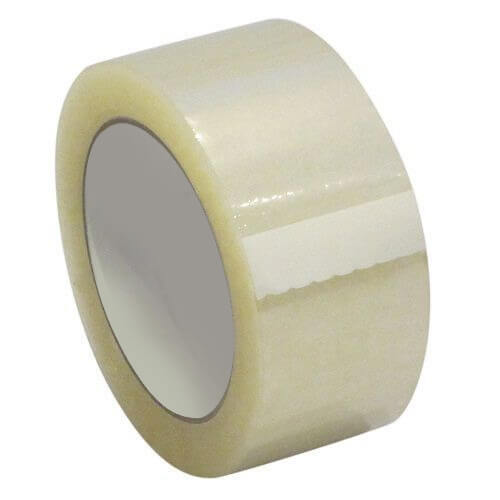
Adhesive tape is a flexible strip of backing material coated with an adhesive and supplied in rolls or pre-cut shapes. Changing the backing — paper, plastic film, cloth, foam or metal foil — and the adhesive — rubber, acrylic or silicone — produces thousands of products, from carton-sealing tape to tapes that hold glass panels on buildings.
The most common form is pressure-sensitive tape (PSA tape, self-stick tape or sticky tape). Its adhesive is permanently tacky and bonds with light pressure, with no heat, water or solvent needed. Other tapes are activated by heat or water, and a few, such as self-fusing tapes, bond only to themselves.
How a tape sticks
A pressure-sensitive adhesive is a soft, viscoelastic material: part solid, part very thick liquid.
- When pressed on, it flows into the microscopic roughness of the surface, building contact. This is called wetting out.
- When pulled, it resists like a solid, so the bond holds.
Three properties describe performance:
| Property | What it means | How it is commonly tested |
|---|---|---|
| Tack | How quickly the adhesive grabs on light contact | Loop tack or rolling-ball tests |
| Peel adhesion | Force to peel tape from a surface | ASTM D3330 or PSTC-101, reported for example in N/25 mm |
| Shear (holding power) | Resistance to sliding under a constant load | Static shear tests reporting time to failure |
Surface energy matters too. Metals and glass are easy to bond; PP, PE and some powder coats are low-energy surfaces that need specially formulated adhesives.
Shape matters as well as material
How a tape is cut affects how well it stays down. Peeling almost always starts at an edge or corner, where stress concentrates. Rounding the corners of a patch or die-cut part — even slightly — spreads that stress and noticeably reduces lifting. The same idea explains why tape ends are often folded or pressed down firmly.
The main families of tape
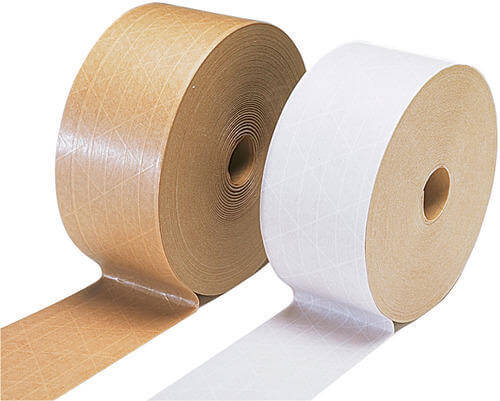
- Packaging: BOPP Tape, paper and kraft tapes, filament and security tapes.
- Masking and protection: Masking Tape, crepe paper tape and surface protection films.
- Electrical: PVC Tape, polyester and polyimide insulation tapes.
- Mounting and bonding: double-sided tissue, polyester, foam and acrylic foam tapes, and transfer tapes.
- Sealing and HVAC: aluminium foil, FSK, duct and mastic tapes.
- Marking and safety: floor marking and reflective tapes.
A short history
Medical tapes came first. Rubber-based adhesive coated on cloth was patented for surgical plasters in the mid-1840s, and zinc-oxide medical plasters were developed in Germany around the start of the twentieth century. Masking tape appeared in the mid-1920s to help car painters produce clean two-tone finishes, and transparent cellulose tape followed around 1930. Duct tape came into wide use during the 1940s, and later decades brought acrylic adhesives, foam tapes and high-strength bonding tapes able to replace mechanical fasteners.
A curious side note: many pressure-sensitive tapes give off a faint glow when peeled quickly from a roll in a dark room. The effect is called triboluminescence and comes from electrical charges separating as the adhesive is pulled apart.
How to choose an adhesive tape
- Surfaces: what materials are being bonded, masked or sealed?
- Environment: temperature, sunlight, moisture and chemicals over the service life.
- Duration: temporary and clean-removing, or permanent?
- Loads: weight, vibration, peel or shear forces.
- Function: bonding, sealing, insulating, protecting, marking or packaging.
- Format: roll width and length, double-sided or single-sided, or die-cut parts.
Key takeaways
- Adhesive tape is a backing plus an adhesive; the combination sets its performance.
- Pressure-sensitive tapes bond by flowing into the surface under pressure.
- Tack, peel and shear are the core performance measures.
- Rounded corners and clean surfaces help any tape stay down.
Frequently asked questions
What is pressure-sensitive tape?
A tape whose adhesive is permanently tacky and bonds with light pressure alone, without heat, water or solvent.
How is tape adhesion measured?
Peel adhesion is commonly measured using methods such as ASTM D3330 or PSTC-101 and reported in units like N/25 mm; tack and shear are tested separately.
Why does tape peel at the corners first?
Corners concentrate peel stress. Rounding the corners spreads that stress and helps the tape stay down.
Why does some tape glow when peeled in the dark?
This is triboluminescence: charges separate as the adhesive is pulled apart, briefly producing light.
Tell us the surface, temperature and job — we'll recommend a grade and share its data sheet.