Why tape is part of the insulation system
In motors, transformers, coils and wiring harnesses, tape is not just a fastener. It separates conductors at different potentials, holds windings and leads in place, protects enamelled wire from abrasion and helps the assembly survive heat and vibration over its life. Because it is part of the insulation system, an electrical tape is chosen against three main properties: thermal class, dielectric strength and flammability behaviour, plus mechanical needs such as conformability and tensile strength.
Thermal (insulation) classes
Insulating materials and systems are grouped by the maximum continuous temperature they are designed to withstand, as set out in IEC 60085 (and related standards). The classes most often met with tapes are:
| Class | Maximum temperature |
|---|---|
| A | 105 ℃ |
| E | 120 ℃ |
| B | 130 ℃ |
| F | 155 ℃ |
| H | 180 ℃ |
| 200 / N | 200 ℃ |
The class describes long-term operating temperature, not a short peak. A tape used in a Class F motor must be suitable for the whole Class F system, and the adhesive matters as much as the backing: rubber adhesives are typically found in lower classes, acrylics in the middle, and silicone adhesives in Class H and above.
The main tape families
Polyester film
Polyester tape (PET film, usually with acrylic or rubber adhesive) is the workhorse for coil wrapping, layer insulation in small transformers, capacitor wrapping and lead holding. It is thin, strong, offers high dielectric strength for its thickness, and resists most solvents and varnishes. Typical acrylic-adhesive polyester insulation tapes sit around Class B, depending on the construction.
Polyimide film
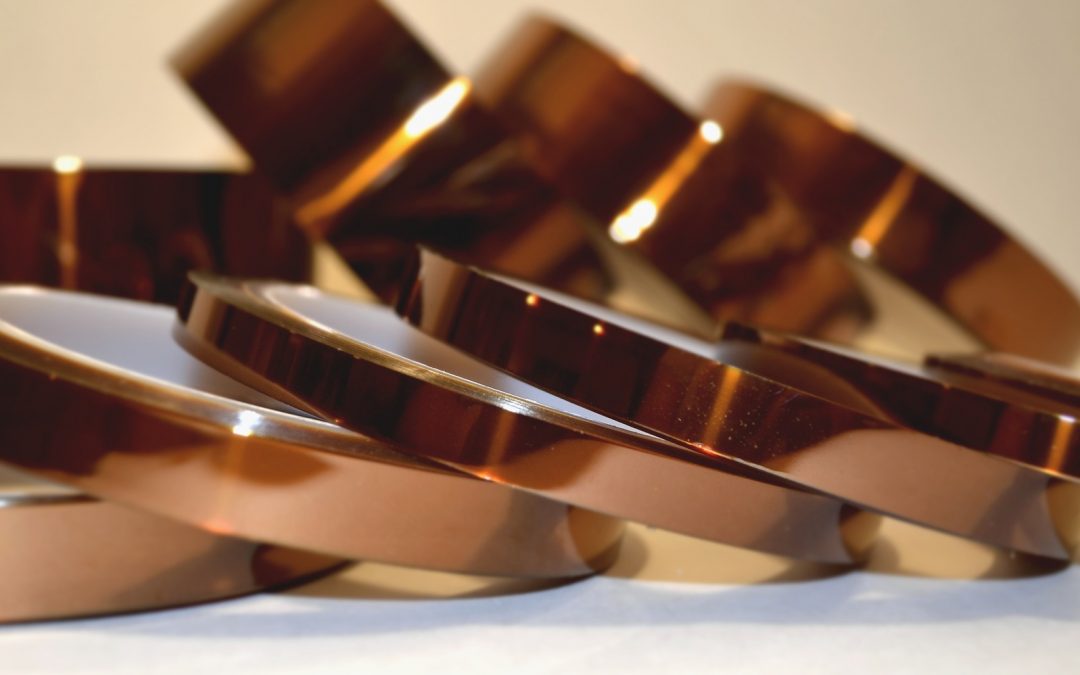
Polyimide film with silicone adhesive (listed on our site as polyamide tape) is used where temperatures are high — Class H windings, high-temperature motors and generators, traction equipment, and electronics that pass through soldering. It keeps its electrical and mechanical properties over a very wide temperature range and is inherently flame resistant.
Glass cloth
Woven glass cloth tapes, usually with silicone adhesive, are chosen for Class H and higher applications that also need strength and abrasion resistance: banding coil layers, dry-type transformers, motor end-windings and heater leads. Glass does not burn and keeps its strength at high temperature, although the cloth is thicker and less conformable than film.
PVC
PVC tape is the familiar flexible, stretchy electrical tape used for joint insulation, harness wrapping, colour-coding of phases and general maintenance. It conforms well to irregular shapes and is often supplied in flame-retardant formulations. Its temperature capability is modest compared with film and glass tapes, so it suits low-voltage wiring and harnesses rather than hot windings.
Cross filament
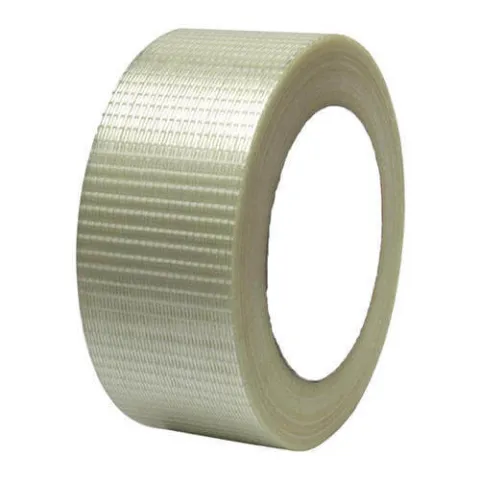
Cross filament tape (glass or polyester yarns in two directions, on a film or with a rubber/acrylic adhesive) is used where a winding or bundle needs high tensile strength and some puncture resistance, for example holding coil ends, banding motor leads or securing components that see vibration.
Dielectric strength
Dielectric (breakdown) strength is the voltage a tape can withstand before electrical breakdown, usually quoted in kV for the tape as supplied, or in kV/mm. It is measured under standardised conditions, commonly in line with ASTM D1000 for pressure-sensitive electrical tapes. Remember that:
- Breakdown voltage rises with thickness, but not perfectly linearly.
- Creases, wrinkles, air pockets and pinholes reduce real-world performance, so good application matters.
- Overlap (typically half-lap wrapping) is used to build thickness and avoid gaps.
- Values on a data sheet are test values, not a design working voltage; designers apply safety margins.
Flame retardancy and UL 94 V-0
Flammability of plastic materials is often described using UL 94. In the vertical test, a V-0 rating means burning stops within 10 seconds after the flame is removed and any drips must not be flaming; V-1 and V-2 allow longer burning (30 seconds), and V-2 permits flaming drips. HB is a slower-burning horizontal rating. For tapes used in appliances, motors and harnesses, a flame-retardant construction helps limit the spread of fire from an electrical fault. Ask for the specific flammability test and result rather than relying on general descriptions.
Where each tape is used
| Application | Common choice |
|---|---|
| Small transformer layer insulation | Polyester film |
| Class H motor and generator windings | Polyimide or glass cloth, silicone adhesive |
| Dry-type transformer banding | Glass cloth |
| Coil end and lead holding | Polyester or cross filament |
| Wiring harness and joints | PVC |
| Electronics soldering, high-heat masking | Polyimide |
Key takeaways
- Start from the thermal class of the equipment and choose a tape (backing and adhesive) suitable for that class.
- Compare dielectric strength at the thickness you will actually use, and wrap with overlap.
- Ask for flammability data where fire safety matters.
- Consider mechanical needs too: conformability for harnesses, tensile strength for banding.
Frequently asked questions
What do Class B, F and H mean for tapes?
They are thermal classes describing maximum continuous temperature: Class B is 130 ℃, Class F 155 ℃ and Class H 180 ℃. The tape should suit the class of the whole insulation system.
Is a higher dielectric strength always better?
It indicates more margin before breakdown, but real performance depends on thickness, overlap and how well the tape is applied. Wrinkles and air gaps reduce it.
What does UL 94 V-0 mean?
It is a vertical flammability rating where burning stops within 10 seconds after the test flame is removed and there are no flaming drips.
Can PVC tape be used on motor windings?
Generally not for hot windings. PVC suits harnesses, joints and low-voltage wiring; windings usually call for polyester, polyimide or glass cloth tapes rated for the motor's class.
Tell us the surface, temperature and job — we'll recommend a grade and share its data sheet.